

-
 Coffee Sample Pack | Medium RoastVendor:Coffee Sample Pack | Medium RoastSchwarzwild Kaffeerösterei
- Regular price
-
From
€36,70 - Regular price
-
€38,70 - Sale price
-
From
€36,70 - Unit price
-
€34,95 per kg
-
 Brazil Capim BrancoVendor:Brazil Capim BrancoSchwarzwild Kaffeerösterei
- Regular price
-
€12,90 €32,90 - Regular price
-
- Sale price
-
€12,90 €32,90 - Unit price
-
€36,86 per kg
-
 Ethiopia YirgacheffeVendor:Ethiopia YirgacheffeSchwarzwild Kaffeerösterei
- Regular price
-
€13,50 €33,90 - Regular price
-
- Sale price
-
€13,50 €33,90 - Unit price
-
€38,57 per kg
-
 Brazil São SilvestreVendor:Brazil São SilvestreSchwarzwild Kaffeerösterei
- Regular price
-
€12,90 €32,90 - Regular price
-
€12,90 - Sale price
-
€12,90 €32,90 - Unit price
-
€36,86 per kg
-
 India Monsooned MalabarVendor:India Monsooned MalabarSchwarzwild Kaffeerösterei
- Regular price
-
€12,90 €32,90 - Regular price
-
- Sale price
-
€12,90 €32,90 - Unit price
-
€36,86 per kg
-
 Colombia Decaffeinated (EA Sugarcane Process)Vendor:Colombia Decaffeinated (EA Sugarcane Process)Schwarzwild Kaffeerösterei
- Regular price
-
€13,90 €33,90 - Regular price
-
- Sale price
-
€13,90 €33,90 - Unit price
-
€39,71 per kg
-
 Coffee | HirschsprungVendor:Coffee | HirschsprungSchwarzwild Kaffeerösterei
- Regular price
-
€12,90 €32,90 - Regular price
-
- Sale price
-
€12,90 €32,90 - Unit price
-
€36,86 per kg
-
 Coffee | TannenwipfelVendor:Coffee | TannenwipfelSchwarzwild Kaffeerösterei
- Regular price
-
€12,90 €32,90 - Regular price
-
- Sale price
-
€12,90 €32,90 - Unit price
-
€36,86 per kg
-
 Rwanda Red BourbonVendor:Rwanda Red BourbonSchwarzwild Kaffeerösterei
- Regular price
-
€12,90 €32,90 - Regular price
-
- Sale price
-
€12,90 €32,90 - Unit price
-
€36,86 per kg
-
 Colombia Casa VerdeVendor:Colombia Casa VerdeSchwarzwild Kaffeerösterei
- Regular price
-
€12,90 €32,90 - Regular price
-
- Sale price
-
€12,90 €32,90 - Unit price
-
€36,86 per kg
-
 Ethiopia SidamoVendor:Ethiopia SidamoSchwarzwild Kaffeerösterei
- Regular price
-
€13,90 €33,90 - Regular price
-
- Sale price
-
€13,90 €33,90 - Unit price
-
€39,71 per kg


Which coffee is suitable for the French Press?
There is no single "right" coffee for the French press. However, medium roasts are particularly exciting, as the long contact time between coffee and water can bring out the bean's distinct aromas very clearly.
Those who prefer classic flavor profiles can opt for coffees with notes of chocolate, caramel, and nut. If you prefer something more vibrant, you will find red berries, stone fruit, floral notes, or a subtly integrated acidity in single-origin coffees.
This is precisely why the French press is excellent for comparing different countries of origin and single origins.
Darker roasts work as well, but usually bring more roasted flavors and less fruitiness to the cup. For a balanced, aromatic coffee, we therefore recommend a medium roast as a starting point.
Find your favorite coffee for the French Press
-

Coffee tasting pack: three medium roasts for the French Press
Discover NowDo you want to find out which coffee best suits your taste? Our medium roast coffee sampler pack offers three different profiles for this purpose: Tannenwipfel, Hirschsprung, and Wilde Hilde.
The Tannenwipfel combines 90% Arabica with 10% Robusta and brings bold notes of dark chocolate and spice to the cup. This makes it particularly suitable for those who like their French press coffee full-bodied and intense.
The Hirschsprung consists of 100% Arabica and is noticeably smoother. Almond, caramel, and a delicate sweetness provide a harmonious, uncomplicated cup profile.
The Wilde Hilde rounds out the pack with a sweet, chocolatey, and slightly fruity aroma. This allows you to directly compare how different medium roasts can taste in a French press.
The sampler pack is therefore an ideal introduction if you want to discover the flavor diversity of French press coffee and find your personal favorite.
-

Our coffee collection: Single origins from various countries of origin
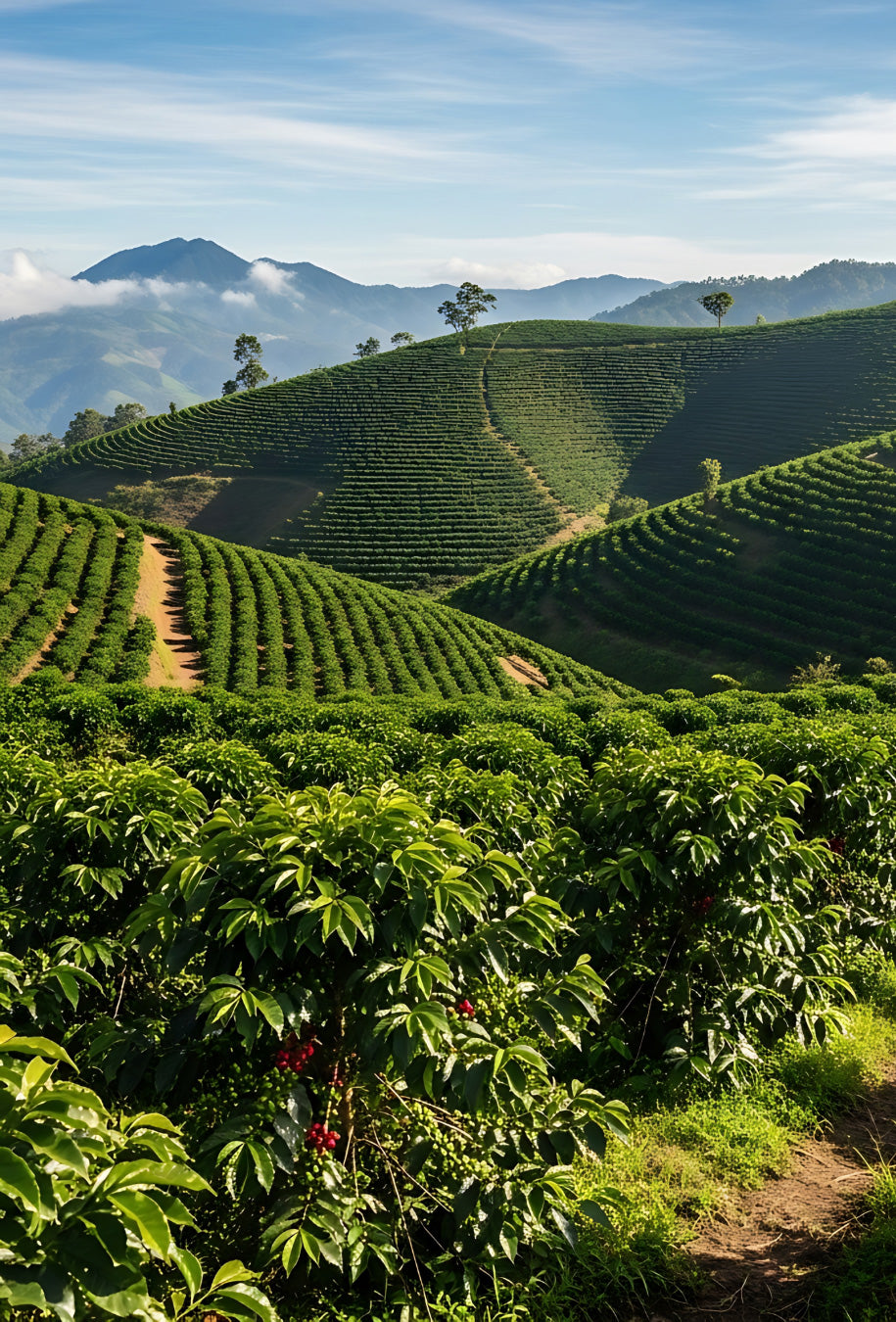
Discover NowYou can find even more variety in our entire coffee collection. In addition to balanced blends, we regularly offer various single origins, the flavor of which is strongly influenced by origin, variety, altitude, and processing.
For instance, Brazilian coffees such as Brasil São Silvestre or Brasil Capim Branco stand for chocolate, nut, caramel, and subtle fruit notes. The India Monsooned Malabar heads in a completely different direction with its spicy, full-bodied, and earthy character.
The Rwanda Red Bourbon combines intense sweetness with red berries and caramel, while coffees from Ethiopia can show particularly floral and fruity profiles with notes such as black tea or white peach.
A decaffeinated coffee from Colombia is also part of our selection.
Since coffee is a natural product and harvests as well as availability change, our selection is always evolving. That is precisely what makes the collection exciting: with the French Press, you can discover different origins and experience how strongly growing region and processing influence the flavor in the cup.


How to prepare French press coffee correctly: grind size, amount, and steeping time
For the French Press, you should coarsely grind your coffee. The individual particles should be significantly coarser than for drip coffee and much coarser than for espresso.
If the coffee is ground too finely, many small particles can pass through the metal mesh filter. The result quickly becomes cloudy, bitter, or unpleasantly dry.
As a starting point, you can use about 60 g of coffee per liter of water. For a 500 ml French Press, that corresponds to approximately 30 g of coffee.
Heat the water and let it cool down briefly after boiling. A temperature of about 92 to 96 °C provides a good starting point for many medium roasts.
Add the coarsely ground coffee powder to the French Press, pour the water in evenly, and ensure all the coffee is saturated. After about four minutes of brewing time, you can carefully stir the resulting crust and then slowly press the plunger down.
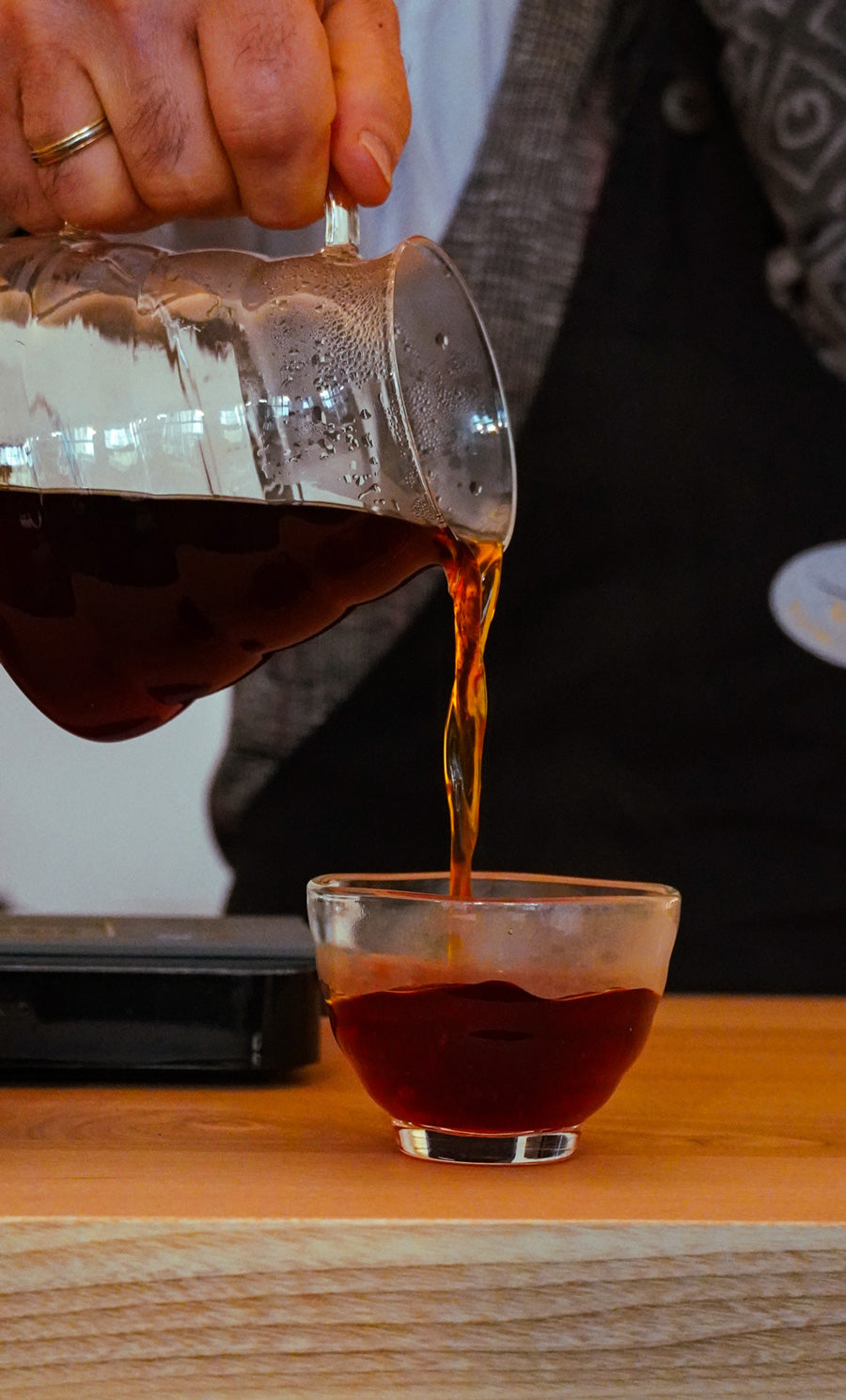
It is best to pour the finished coffee directly into cups or a separate carafe. If it remains in contact with the coffee grounds, the extraction continues and the taste can become increasingly bitter.
Why is the French Press particularly suitable for single-origin coffee?
The French Press is an immersion method: all of the coffee is in the water at the same time during extraction.
Unlike many paper filter methods, the metal mesh also retains fewer of the natural coffee oils. This creates more body and a fuller mouthfeel.
Especially with single-origin coffees, this allows you to get to know different flavor profiles particularly well. A Brazilian coffee can taste soft, nutty, and caramelly, while an African coffee can show significantly fruitier or more floral notes.
This makes the French Press an uncomplicated way to not only prepare coffee, but to actually taste the differences between countries of origin, varieties, and processing methods.